
Medicine is no longer just a one-size-fits-all affair. Today, medicine is becoming more personalized, with treatments being customized based on the genetic makeup of the patient. At the core of all these changes is the concept of DNA sequencing.
But do you know exactly what the role of DNA sequencing in precision medicine is?
What is the purpose of DNA sequencing, and what are the uses of DNA sequencing in medicine?
In this blog, we will look at the uses of DNA sequencing and the growing uses of DNA sequencing in medicine and understand how this powerful technology is changing the future of medicine.
Understanding DNA Sequencing
Before we move on to the impact of the same, it’s important to first understand what exactly the term DNA sequencing means.
DNA sequencing is the process of determining the precise sequence of nucleotides in a DNA molecule. This sequence of nucleotides is the basis of the genetic instructions used by cells to function, grow, and repair themselves.
What is the purpose of DNA sequencing?
The main purpose of DNA sequencing is to detect the variations, mutations, and patterns present in the genes of an individual that have a major impact on the health and diseases of the same individual.
In the context of precision medicine, the main purpose of DNA sequencing is to create a foundation for making informed decisions in the healthcare of the individual.
The Evolution of DNA Sequencing in Healthcare
DNA sequencing has undergone tremendous change over the past few decades. It has changed from requiring years of laboratory time to requiring days or even hours with the advent of next-generation sequencing (NGS) technologies.
As a result, the applications of DNA sequencing have extended beyond basic research. Today, DNA sequencing is used for:
- Oncology
- Rare disease diagnostics
- Pharmacogenomics
- Infectious disease tracking
- Prenatal screening
The rapid advancement of genomic technologies has not only made precision medicine possible but also accessible.
What Is the Purpose of DNA Sequencing in Precision Medicine?
Precision medicine is the approach that takes into account the individual’s genetic blueprint to deliver the most effective treatment.
Instead of focusing on the symptoms of the disease to deliver treatment, doctors rely on the individual’s genome to determine the actual reason behind the occurrence of the condition.
The objectives of DNA sequencing in the context of the above approach include:
- Determining the presence of genetic mutations that lead to the occurrence of the condition
- Determining the response of the individual to a particular drug
- Determining the presence of inherited diseases
- Monitoring the progression of the disease
- Creating targeted treatments
Understanding the actual blueprint of the individual and the condition helps deliver the most effective treatment.
Applications of DNA Sequencing in Cancer Care
One of the most impactful uses and applications of DNA sequencing is in the field of oncology.
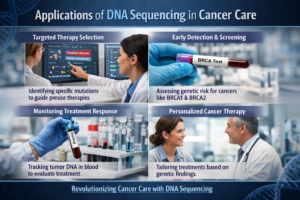
Cancer results from mutations in the genes that control unregulated growth. DNA sequencing helps identify the exact mutations that are causing the cancer.
-
Targeted therapy selection
This helps determine if the tumor contains mutations that are targeted by certain therapies. This makes sure that the right treatment is given to the patient.
-
Early detection and screening
Genetic tests may also be able to identify certain genes that may increase the risk of developing certain cancers, such as the BRCA1 and BRCA2 genes.
-
Monitoring treatment response
Liquid biopsy tests involve analyzing the DNA in the blood and monitoring the response of the tumor to the treatment.
These applications and uses of DNA sequencing are revolutionizing the treatment and care of patients with cancer from the traditional chemotherapy methods to the personalized treatment that DNA sequencing makes possible.
Uses for DNA Sequencing in Rare Disease Diagnosis
Many rare genetic diseases can be difficult to diagnose, partly because symptoms may resemble those of other diseases.
One of the most important applications of DNA sequencing technology can be to diagnose rare genetic mutations that may not be detected by other methods. DNA sequencing can analyze thousands of genes at a time.
To patients who have spent years trying to find a diagnosis, DNA sequencing can bring:
- A proper diagnosis
- Clarity for family members
- A proper treatment plan
In many cases, a timely genetic diagnosis can lead to better outcomes for patients.
Infectious Disease Surveillance and Public Health
Other than the direct care of patients, the uses of dna sequencing also include applications in public health.
DNA sequencing can be used to identify and track pathogens, including viruses and bacteria. For instance, during an outbreak, dna sequencing can be used to:
- Detect mutations
- Understand patterns of transmission
- Develop vaccines
The COVID-19 pandemic has shown the need for rapid dna sequencing to understand the evolution of the virus and prevent further spread.
Data, Technology, and Precision Medicine
While the scientific advancements are quite impressive, the management and interpretation of the results are just as important. DNA sequencing produces vast amounts of complex information, which requires robust digital infrastructure.
Here, technology companies can play a revolutionary role.
Uncoded is a technology company that focuses on designing intelligent, scalable digital solutions that can support a data-driven healthcare system.
By designing secure platforms that can manage genomic information, integrate clinical information, and improve analytics, Uncoded can help healthcare systems turn complex DNA sequencing results into actionable information.
As precision medicine continues to grow, digital innovation can ensure that results of DNA sequencing are accessible, interpretable, and securely integrated into patient care.
Ethical Considerations in DNA Sequencing
However, while the advantages are tremendous, there are also important ethical considerations associated with DNA sequencing.
They include:
- Data privacy and security
- Genetic discrimination issues
- Informed consent
- Responsible sharing of data
Secure digital infrastructure and stringent regulatory frameworks are critical to safeguarding patient data while continuing to make scientific progress.
Platforms that are engineered with a privacy-first approach can provide peace of mind that genomic data is being used responsibly.
The Future of DNA Sequencing in Precision Medicine
The future of precision medicine is heavily dependent on the continued innovation in the field of genomic science.
The emerging trends in the field of genomic science include:
- Faster and cost-effective whole-genome sequencing
- The use of artificial intelligence in genomic science
- Personalized cancer vaccines
- CRISPR gene editing therapies
As the field continues to evolve, the uses and applications of dna sequencing will continue to increase.
As the field becomes more accessible and the digital ecosystem continues to improve with the help of companies like Uncoded, the field of genomic medicine continues to become integrated with everyday healthcare practices.
Final Thoughts
Today, DNA sequencing has emerged as an essential tool of precision medicine, which is transforming the diagnosis, treatment, and prevention of diseases.
The question of what is the purpose of DNA sequencing helps to understand its importance in determining genetic variations, targeted therapies, and outcomes of treatments.
The increasing applications of DNA sequencing cover a broad spectrum of medical fields, which helps to understand its impact on precision medicine.
As digital technologies are advancing and innovative companies like Uncoded are building advanced platforms like myeloid profiler DNA Panel to manage complex genetic data, precision medicine is becoming more efficient, secure, and easily accessible.
DNA sequencing is not just a laboratory technique; it is a powerful technology for the delivery of personalized healthcare. By deciphering the genetic code of life, precision medicine is one step closer to the delivery of safer, smarter, and more individualized treatments.