

Among women, breast cancer is one of the most prevalent types of cancer around the world. While medical science has made immense progress in early detection and treatment, many females have one important question.
What Causes Breast Cancer?
It is essential to understand the reasons that give birth to this disease because awareness is always the first step in prevention, early diagnosis, and better outcomes.
It does not usually develop for any single reason but as a result of genetic, hormonal, lifestyle, and environmental factors combined.
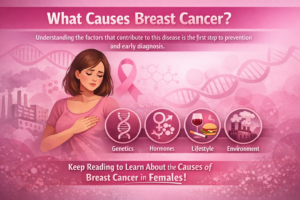
To help you deal with this and to promote awareness about breast cancer in females, we have discussed the causes and other things in this post.
So, you must continue reading to learn about causes of breast cancer in females.
Understanding Breast Cancer
Breast cancer arises from abnormal cell growth in the breast, resulting in a tumor or lump. The abnormal cells can infiltrate adjacent tissues and, in more advanced cases, metastasize in other parts of the body.
While it can occur in men, it is much more prevalent among women owing to differing tissue in their breasts. Before exploring common causes of breast cancer, it is essential to recognize that in most cases, having a single factor, let alone multiple ones, does not necessarily mean that a woman will develop breast cancer.
Here we will start with causes of breast cancer.
Genetic and Hereditary Causes of Breast Cancer
Family Background and Inherited Genes
Genetic factors are one of the most common causes of conditions like breast cancer among females. Women who have a family member, like a mother, sister, or daughter, with breast cancer are also at risk of acquiring it.
Inherited genetic mutations, specifically for the BRCA1 and BRCA2 genes, are one of the most prominent risk factors associated with the development of breast cancer. The genes play a crucial role in repairing damaged DNA; thus, their mutation can increase the risk of developing cancer.
Personal History of Breast Conditions
In women who have had breast cancer, the risk of developing cancer in the second breast is higher. There are some non-cancerous conditions of the breast, like atypical hyperplasia, that may also raise this risk.
Hormonal Factors and Breast Cancer Risk
Estrogen and Progesterone Receptors
Hormones are also very important in the development of breast cancer. Estrogen and progesterone hormones have the ability to promote the growth of some breast cancer cells. Being exposed to these hormones for a longer time is believed to be among the causes of breast cancer.
Those women having early menstruation (before age 12) and late menopause (after age 55) are prone to this due to extra exposure to the estrogen hormone.
Hormone Replacement Therapy (HRT)
Long-term use of hormonal replacement therapy, particularly a combination of estrogen and progesterone, has been shown to contribute to the risk of developing breast cancer. Such information is relevant when exploring the factors that lead to the development of breast cancer, particularly among postmenopausal women.
Age and Gender as Major Risk Factors
Increasing Age
Age is considered one of the breast cancer risk factors that are most prominent. The risk of breast cancer gets higher as the woman ages. Most of the breast cancer cases are reported after the age of 50 years. However, breast cancer can also affect women below 50 years.
Being female is one of the risk factors with the highest risk rate. Women have more cells in their breasts and female hormones; hence, more women suffer from breast cancer compared to men.
Lifestyle-Related Causes of Breast Cancer in Females
Poor Diet or Obesity
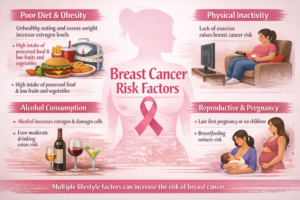
Unhealthy lifestyles (i.e., eating poorly) and obesity are increasingly gaining attention as risk factors for female breast cancer.
Excess fat, particularly after menopause, results in increased production of estrogen, a hormone that contributes to the development of some cancers. High consumption of processed foods and saturated fat and low consumption of fruits and vegetables may increase the potential for developing breast cancer.
Physical Inactivity
Physical inactivity is another lifestyle-related risk factor for breast cancer. Women who engage in regular exercise are at a lower risk for developing breast cancer when compared to women with sedentary lifestyles.
Alcohol Consumption
Alcohol consumption has long been established as a risk factor for breast cancer. Even moderate levels of alcohol consumption increase a woman’s risk of developing breast cancer because of the effect alcohol has on estrogen levels and also because it may cause damage to the DNA within breast cells.
Reproductive and Pregnancy
Women 30 or older having their first child or who are childless are at somewhat greater risk than other women; however, women who conceive will have fewer menstrual cycles during their lifetime; thus, they may experience lower than normal lifetime exposure to estrogen.
Women who breastfeed will have an added benefit from reduced breast cancer risk: Studies indicate a slight decreased risk associated with breastfeeding; therefore, longer duration of breastfeeding may provide women with greater protective benefit. Moreover, breastfeeding should be viewed as a protective factor for breast cancer, not as a direct cause.
Environmental and Radiation Exposure
Radiation Exposures
Women are commonly exposed to radiation through adolescence and early adulthood, usually in the breast region. This can lead to a high incidence of breast cancer in women who receive radiation therapy for other cancers like lymphoma.
Environmental Toxins
Many components of plastics and cosmetics may have chemical components that act as endocrine disruptors. The continued study of long-term exposures to these substances has shown a link between long-term exposure to endocrine disruptors and breast cancer.
Role of Breast Density in Risk of Developing Breast Cancer
Women with dense breast tissue (increased fibrous tissue) are at increased risk of developing breast cancer and have more difficulty detecting tumors using mammograms when compared to women with fat-dominated breast tissue.
Therefore, women with dense breast tissue have a greater need for regular mammographic screening in order to catch any undetected tumors in an early stage before they grow too large.
Symptoms of Breast Cancer in Females
The signs and symptoms of breast cancer in women are just as important as the causes because finding breast cancer early can lead to saving lives. Breast cancer symptoms can include:
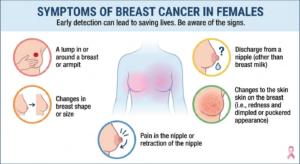
- A lump in or around a breast or armpit
- Changes in breast shape or size
- Discharge from a nipple (other than breast milk)
- Changes to the skin on the breast (i.e., redness and dimpled or puckered appearance)
- Pain in the nipple or retraction of the nipple
While not every lump in the breast is cancerous, any persistent change should be evaluated by a medical professional.
Can Breast Cancer Be Prevented?
Although not all of the factors that increase the risk of breast cancer can be controlled by individuals (i.e., genetics, advancing age), there are a number of factors related to women’s lifestyles that can be controlled.
Maintaining a healthy weight, remaining physically active, limiting alcohol consumption, and participating in regular screenings all help lower the risk for developing breast cancer.
The importance of health education for women in creating awareness regarding women’s health issues as well as cancer prevention and the need for early detection is paramount.
Uncoded provides important cancer care product kit by that enable women to become more informed about their health and well-being.
Importance of Regular Screening and Awareness
This is information about what causes breast cancer so that women will have the information to make educated choices regarding their health.
Proactive breast health means that women can maximize the chance of early detection of breast cancer through routine self-exams, clinical breast examinations performed by trained professionals, and mammograms when advised by the healthcare professional.
For women with a strong family history and/or genetic predisposition to developing breast cancer, a personalized screening plan should be established with their healthcare professional.
Also Read : Early Symptoms of Breast Cancer Every Woman Should Know
To Wrap Up
As a multifactorial disease, the causes of breast cancer in women are diverse. However, the major causes of breast cancer among women are genetic mutation, hormonal imbalance, lifestyle, reproductive factors, and environment.
With this knowledge about the causes of breast cancer and early symptoms of the disease in females, women can prevent the medical condition. Also, you can contact the Uncoded to get the BRCA1/2 panel kit to deal with breast cancer.
However, awareness, education, and early treatment are the greatest keys in lessening the effects of breast cancer.