
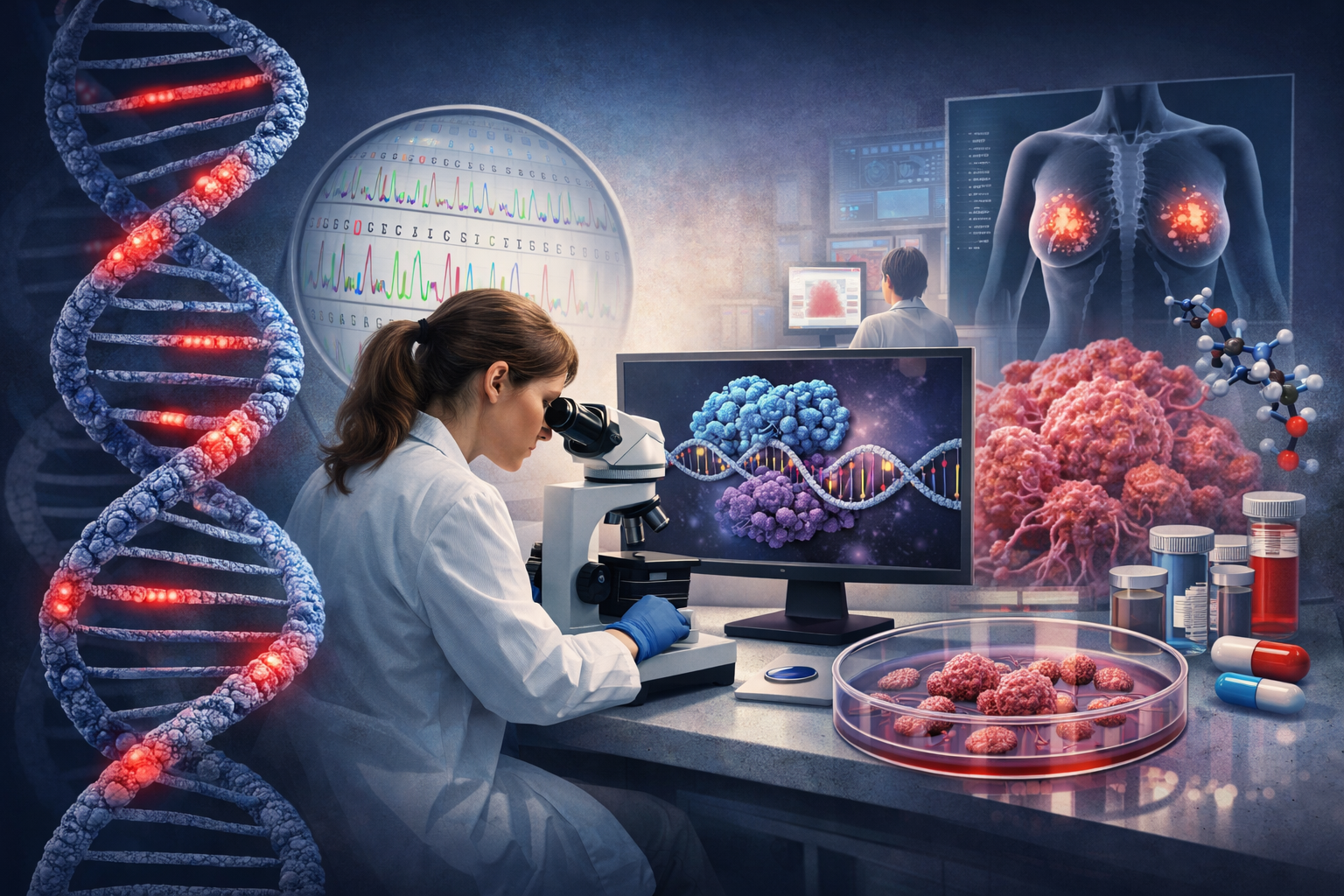
Cancer research has revolutionized the way physicians conceptualize, diagnose, and manage cancer. Among the most important developments in the area of cancer research is the identification of BRCA mutations, especially within the context of breast and ovarian cancers.
Instead of looking at cancer as a generic disease, contemporary medicine emphasizes the growing field of precision oncology, which targets therapy according to an individual’s own genes.
The heart of this strategy revolves around the genes BRCA1 and BRCA2, which, when mutated, can significantly affect cancer susceptibility and therapy.
In this blog, we will delve into what are BRCA mutations, how the BRCA1 & BRCA2 test kit genes work, and why genetic testing for breast cancer matters.
Let’s begin.
Understanding What Are BRCA Mutations
To comprehend the significance of BRCA mutations in precision medicine for cancer, it is essential to answer a question that is frequently asked; What are BRCA mutations?
BRCA mutations refer to inherited genetic changes in the BRCA1 gene or the BRCA2 gene. These genes have the normal biological function of repairing damaged DNA.
Therefore, if these genes are working in the normal way, they serve as tumor suppressor genes that prevent the growth of abnormal cells.
Nevertheless, due to mutations, there are defects in DNA repair mechanisms. Gradually, these give rise to an accumulation of genetic errors, which lead to a higher chance of developing cancer, particularly breast, ovarian, prostate, or pancreatic cancer.
What Are BRCA1 and BRCA2 Genes?
The BRCA1 and BRCA2 genes are also essential in the protection of genomic integrity. These genes are mediators in the repair of double-strand DNA breaks, which are some of the most harmful types of DNA damage.

Primary Role of BRCA Genes:
- Repair damaged DNA
- Prevent abnormal cell growth
- Ensure genetic stability
If a mutation occurs in the BRCA1 gene, or even in the BRCA 2 gene, the cell is not able to properly repair DNA.
This is a weakness that is harnessed for targeting cancer cells through treatments developed through precision research.
How BRCA Mutations Increase Breast Cancer Risk
There is a well-established connection between the BRCA1 BRCA2 mutations and breast cancer.
People who inherit a harmful BRCA mutation are at much higher lifetime risk for breast cancer compared with the general population.
Impact of BRCA Mutations:
- Increased risk of early-onset breast cancer
- Higher risk of bilateral breast cancer
- Greater possibility of aggressive tumor subtypes.
BRCA1-related breast cancers are usually triple-negative; they do not contain any estrogen, progesterone, or HER2 receptors.
This renders conventional hormone therapies ineffective and shows the need to look toward targeted therapies.
Genetic Testing for Breast Cancer: Why It Matters
There is a well-defined link between BRCA1/2 gene mutations and breast cancers. Individuals who carry a harmful BRCA mutation face a significantly increased lifetime risk for breast cancer compared to the normal population.

Impact of BRCA Mutations:
- Early onset of breast cancer
- Increased risk of bilateral breast cancer
- Higher risk of more aggressive tumor types.
BRCA1-associated breast cancers are typically triple-negative cancers lacking estrogen receptors, progesterone receptors, and HER2 receptors.
This naturally renders hormone therapies ineffective and emphasizes the importance of turning to targeted therapies.
Precision Oncology Research and BRCA Mutations
Precision cancer research is concerned with the molecular and genetic profile of cancer, not merely the site or size of the tumor.
Precision medicine attacks cancer cells through genetic vulnerabilities like impaired DNA repair function, while conventional treatment attacks rapidly dividing cells without any discrimination.
Why BRCA Mutations Matter in Precision Oncology:
- Enhance response rates
- Improve treatment
- Eliminate unnecessary toxicity
- Improve long-term results
This represents a paradigm shift from mainstream chemotherapy to more precise targeted approaches in the treatment of cancer.
BRCA1 BRCA2 Mutations in Treatment for Breast Cancer
There has been major progress in the management of breast cancer associated with mutations of the BRCA gene because of advancements in precision medicine.

Common Treatment Approaches:
- PARP inhibitors, inhibitors of alternative DNA repair routes
- Platinum chemotherapy
- Personalized Surgical Planning
- Tailored radiation strategies
PARP inhibitors are more effective for BRCA mutated tumors. Since a BRCA-deficient cell already has difficulty repairing DNA, using a PARP inhibitor kills cancer cells by rendering them irreparable, but it doesn’t affect normal cells, as they can repair their DNA.
The need for research-driven and mutation-specific therapeutic approaches that could adhere to current guidelines of precision medicine in oncology has been encouraged by Uncoded.
Who Should Consider BRCA Genetic Testing?
Not all individuals are candidates for BRCA testing; however, some are.
High-Risk Groups:
- People with breast or ovarian cancer in the family
- Breast cancer diagnosed prior to age 50
- Relatives with other types of cancer
- Male breast cancer patients
- Known mutation within the family
Early identification enables individuals, as well as healthcare professionals, to begin long-term strategies for monitoring, prevention, and treatment.
The Role of Targeted Therapies in BRCA-Positive Cancers
Targeted therapy is one of the most successful applications of precision cancer research. This therapy targets particular genetic anomalies in a bid to reduce the negative effects and enhance effectiveness.
Benefits of Targeted Treatment:
- Increased specificity to cancer cells
- Less damage to normal tissues
- Better quality of life
- Improved control of disease progression
BRCA therapies are already demonstrating extension into ovarian, prostatic, and pancreatic malignancies, again emphasizing the universality of BRCA in cancer treatment.
Living with a BRCA Mutation
A positive BRCA test does not mean that cancer is an absolute reality. Some people have led long lives without any kind of problem.
Long-Term Management Strategies
- Routine screening and imaging
- Lifestyle changes
- Preventive medications
- Preventive surgeries in selected cases
Access to education and proper information, such as the type of resources mentioned are offered by Uncoded, can be major tools for enabling people to make educated healthcare choices.
To Wrap Up
BRCA mutations are one of the facets that have given a new face to cancer care in modern times.
Being able to learn what are BRCA mutations, what role the BRCA1 and BRCA2 genes play in the development of breast cancer, and how genetic assessment can help treated patients has made it possible to offer more effective, individualized treatments.
Precision oncology research has changed the way BRCA mutations are viewed, evolving them from pure risk factors into actionable insights that guide targeted therapies, improving outcomes and redefining cancer management.
As science continues to evolve, companies like Uncoded showcase a future where genetics-driven oncology becomes increasingly more integral to ensure that patients receive care not only tailored to their diagnosis but also, to a greater degree, their DNA.