Glaucoma Panel

The Rising Need for Early, Accurate Genetic Diagnosis in Glaucoma
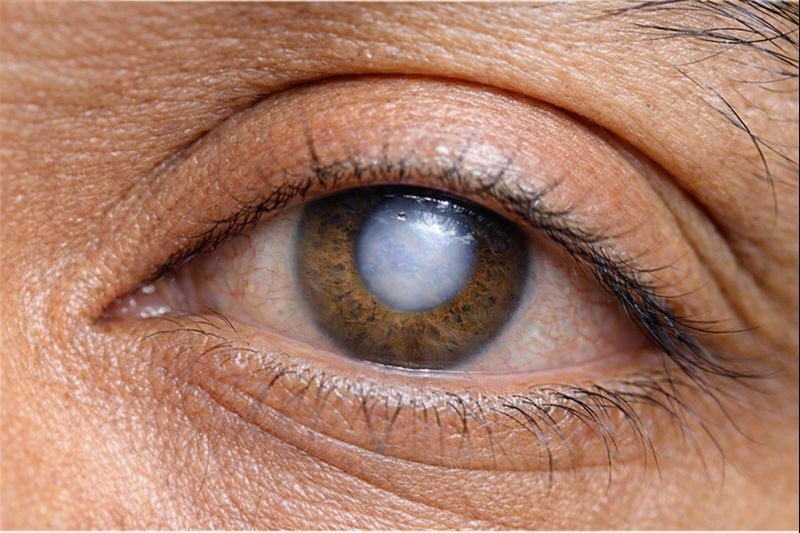
Glaucoma is one of the leading causes of irreversible blindness, affecting millions of people worldwide. In India, more than 12 million individuals are currently living with glaucoma, and nearly 90 percent remain undiagnosed due to the silent and progressive nature of the disease. As glaucoma becomes more widespread across all age groups, including congenital and juvenile forms, the need for early and genetics-based diagnosis using tools such as a glaucoma panel test kit continues to grow.
Conventional clinical tools help detect structural and functional damage, but they often identify glaucoma only after the optic nerve has already been compromised. With the expanding role of precision medicine in ophthalmology, genomic testing through a glaucoma gene panel test kit is emerging as a powerful approach to detect disease risk early, improve prognosis, and personalize patient care.
Transforming Glaucoma Care with Precision Genomics
Advancements in next generation sequencing have enabled comprehensive and accurate analysis of glaucoma associated genes. These genetic insights support early diagnosis, better patient stratification, and improved long term care planning.
Integrating genetic insights into routine eye care enables earlier glaucoma detection, targeted intervention, and risk-based follow up. It also supports family screening and more personalised, informed clinical decisions.
Genomics is shifting glaucoma management toward prevention and proactive care, creating opportunities for more effective and timely clinical decisions.
Introducing the Uncoded Glaucoma Panel
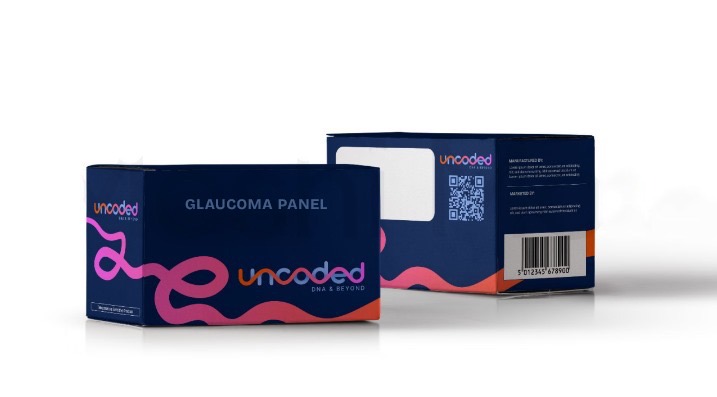
The Uncoded Glaucoma Panel is a targeted, high performance next generation sequencing assay designed as a comprehensive glaucoma panel test kit to detect clinically relevant variants across 21 genes associated with congenital, juvenile, and adult-onset glaucoma.
Built with deep sequencing coverage and advanced chemistry, the panel is designed for ophthalmologists, geneticists, and research laboratories, it delivers actionable insights that support diagnosis, prognosis, and treatment planning.
The panel integrates smoothly with major Illumina platforms and features an end-to end workflow that includes library preparation, analysis, annotation, and reporting.

Why Choose the Uncoded Glaucoma Panel
- High Sensitivity Variant Detection: Provides 300–500× coverage with >95% on target performance for accurate detection of clinically relevant variants.
- Clinically Curated Gene Coverage: Targets 21 genes associated with congenital, juvenile, and adult glaucoma, selected based on strong scientific and clinical evidence.
- Optimized Workflow Efficiency: Utilizes a compact panel design and optimized chemistry to reduce hands on time and support faster sequencing and reporting.
- Platform Compatibility: Compatible with all Illumina platforms (For example: iSeq 100, MiniSeq, MiSeq, MiSeq i100 Series, and NextSeq)
- Integrated Bioinformatics: Includes curated variant calling, automated annotation, and structured reporting to support ophthalmologists and genetic counsellors.
- High Clinical Relevance: Enables early identification of genetic risk factors to improve monitoring, intervention planning, and family screening.
- Reliable Performance: Provides consistent and reproducible detection of SNVs, INDELs, and CNVs across multiple runs.

Applications Across Ophthalmology and Genomics
Clinical Diagnostics
Supports genetic diagnosis of congenital, juvenile, and adult-onset glaucoma for personalised patient care.
Risk Assessment and Family Screening
Helps identify at risk relatives and supports early monitoring and preventive action.
Translational Medicine
Supports research on biomarkers, disease progression, and emerging therapeutic targets.
Population Screening Programs
Useful for community-based screening efforts in high-risk populations.
| Product Name | Cat. No. | Pack Size |
| Glaucoma Panel | 14513 | 24 reactions |

-20 °C to 4 °C

Frequently Asked Questions
Curious about workflow, accuracy, or compatibility? Find all your answers here
What are the challenges of 16S V3-V4?
How does16S V3-V4 improve compliance?
Lorem ipsum dolor sit amet consectetur. Dolor aenean lorem integer nunc at nascetur enim. At porta eu imperdiet porta condimentum vitae in lacus. Amet placerat senectus justo integer nulla lobortis bibendum sed quam. Morbi consequat iaculis et est elementum in.
What is 16S V3-V4?
Lorem ipsum dolor sit amet consectetur. Dolor aenean lorem integer nunc at nascetur enim. At porta eu imperdiet porta condimentum vitae in lacus. Amet placerat senectus justo integer nulla lobortis bibendum sed quam. Morbi consequat iaculis et est elementum in.
How does16S V3-V4 improve compliance?
Lorem ipsum dolor sit amet consectetur. Dolor aenean lorem integer nunc at nascetur enim. At porta eu imperdiet porta condimentum vitae in lacus. Amet placerat senectus justo integer nulla lobortis bibendum sed quam. Morbi consequat iaculis et est elementum in.