
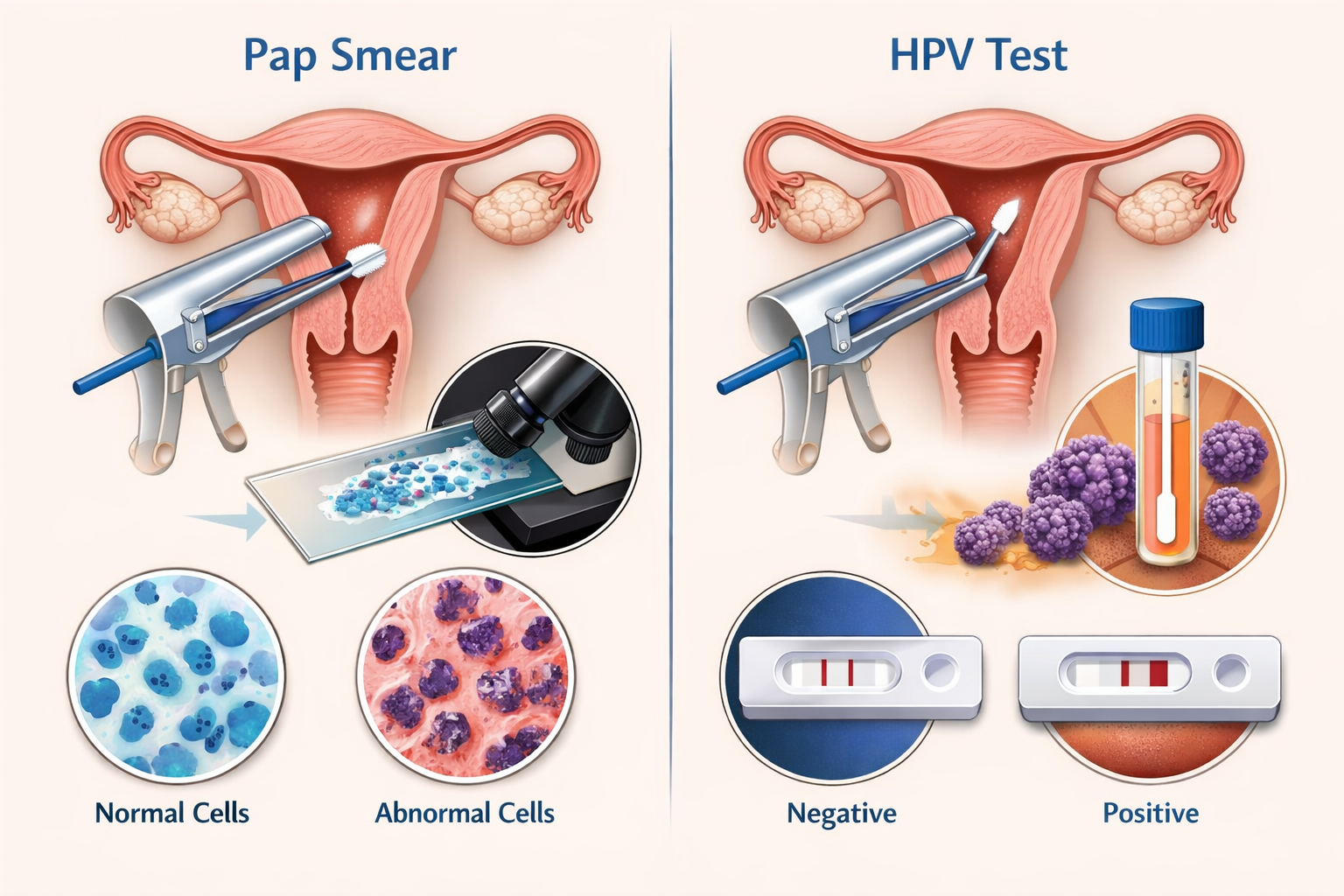
Cervical cancer is also one of the most preventable types of cancer in women. It still manages to impact thousands of women every year due to either late detection or a lack of awareness. Cervical cancer screening is important for detecting any abnormalities in the tissues of the cervix even before they turn cancerous.
Two of the commonly advised screening tools for these tests are the Pap test and the HPV test. These two tests differ, even though they target the prevention of cancer.
Many women ask, “HPV test or Pap test, which do I choose?”
Does a Pap test check for HPV?
In this article, we have mentioned the difference between a Pap smear test and an HPV test, how each procedure is done, when each test is suggested, and why it is vital to understand both for a woman to make an educated decision about her own healthcare.
Understanding Cervical Cancer and the Need for Screening
The cancer takes several years to develop. The initial stages of cervical cancer involve abnormalities in the cervical tissues, which are often induced by human papillomavirus (HPV) infection.
Most HPV infections will resolve on their own, but the high-risk types can induce changes in the cells that, when not identified early, will lead to cancer. It is at this point that the Pap smear or HPV test starts saving lives.
Uncoded takes the initiative to provide the cancer care products that aim at decreasing the cases of cervical cancer.
What Is a Pap Smear?
A Pap smear, or Pap test, is a classic screening procedure that has been in use for decades for the identification of abnormal or precancerous cells of the cervix.
What Do They Use for a Pap Smear?
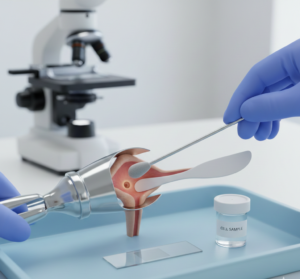
There are several types during the process:
- The speculum is placed inside the vagina to allow observation of the cervix
- The cells are taken using a small brush or spatula.
- The sample is dispatched for microscopic analysis at a lab
It thus directly answers a frequently asked question of what they use for a Pap smear, which is simple medical instruments for the purpose of safely sampling surface cells of the cervix.
What Does a Pap Smear Detect?
- Abnormal change in cervical cells
- Precancerous lesions
- Early warning signs of cervical cancer
However, a Pap smear alone does not usually detect the presence of human papillomavirus unless conducted in combination with HPV testing.
Does a Pap Smear Check for HPV?
One of the most commonly asked questions is, “Does a Pap smear check for HPV?”
The answer is no, not by itself.
A Pap smear looks for cellular changes, not the virus causing them. However:
Abnormal cell changes may suggest the presence of HPV. Testing for HPV must be done alone or as part of co-testing. This is the differentiation that essentially has to be taken into consideration when comparing the HPV test vs. the Pap smear.
What Is an HPV Test?
An HPV test is specifically employed to check for the presence of high-risk HPV DNA in cervical cells. High-risk HPV strains are established to induce cervical cancer.

HPV screening is a preventive test, which is characterized by the fact that
- Indicates an infection before abnormal cells occur
- Predicts the future risk of cancer development
By taking this proactive approach, the healthcare provider is able to monitor or treat the women before the damage starts at the cell level.
At Uncoded, the screening for HPV is presented as:
Human Papilloma Virus Screening: As a major breakthrough in the field of modern women’s diagnosis.
What Is HPV in Pap Smear Reports?
Patients frequently will encounter the terms ‘HPV positive,’ ‘HPV positive test,’ ‘HPV positive screening,’ ‘HPV-positive test result,’ ‘HPV positive findings
This typically involves:
- HPV testing was performed in addition to the Pap test
- High-risk HPV DNA was found in the sample
- It is not necessarily cancer, although it suggests the need to:
Further evaluation, such as colposcopy, when needed
HPV Test Vs Pap Smear: Main Differences Explored
Rather than being unclear, understanding the difference between a Pap smear and an HPV test allows for easier comparisons between the two.
| Aspect | Pap Smear | HPV Test |
| What They Detect | Abnormal / carcinoid cells | High-risk HPV infection |
| Timing of Detection | Detects abnormalities after cell changes occur | Detects infection before cell abnormalities occur |
| Accuracy | Effective, but may not detect early HPV infections | More sensitive for assessing cancer risk |
| Frequency | Every 3 years (age dependent) | Every 5 years in most guidelines |
| Purpose | Tests the current condition of cervical cells | Predicts future cervical cancer risk |
HPV screening predicts It brings out the relevance of the comparison between the HPV test and the Pap smear in terms of the choice the discussion is not really making.
Co-Testing: When Pap Smear and HPV Test Are Done Together
Co-testing involves doing both tests during one visit.
Advantages of Co-Testing
- Higher detection accuracy
- Reduced likelihood of untreated anomalies
- In patients with normal test outcomes, it is recommended to screen at longer
Many of the healthcare providers and services, recommend co-testing women over 30 years because of its effectiveness as a protective measure.
Who Should Get Which Test?
- Female Respondents Age 21
- Pap smear every 3 years
- HPV test only if Pap test is abnormal
- Women between the Ages of
- HPV test alone every 5 years or
- Co-testing every 5 years or
- Pap smear alone at 3-year interval
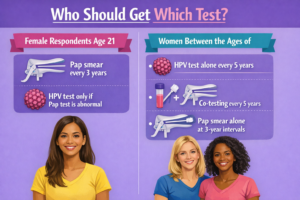
The doctor may advise you on the best course based on medical history and availability of proper diagnostic equipment.
Are These Tests Painful or Risky?
Both of these tests are:
- Quick, usually under 5 minutes
- Safe
- Only minimally uncomfortable
There’s no major risk, and mild discomfort is temporary. The benefits far outweigh any momentary unease.
Why HPV Testing is Gaining in Importance
Global health guidelines are increasingly focusing on HPV screening because of the following reasons:
- Most cervical cancer, more than 95%-is caused by HPV.
- Early viral detection prevents disease progression.
- HPV testing significantly decreases mortality from cervical cancer.
Such screening tools and the cancer care kit are bought from Uncoded and are being brought into routine women’s healthcare. .
Final Thoughts
There is no better among the two. The knowledge of the difference between a Pap smear and a HPV test gives power to women in making decisions.
- The Pap smear is used to detect existing changes in cells
- The HPV tests diagnose future cancer risk
- They, together, provide the best possible defense.
Regular screening, with supportive diagnostics, awareness campaigns, and reliable professionals such as Uncoded, could mean the difference between life and death.