

You all know that pregnancy is a life-changing journey for expecting parents. Which is completely filled with excitement, anticipation, and a touch of worry. As medical science advances, so does our ability to ensure the health and safety of both mother and baby.
One of the most significant developments in modern prenatal care is understanding what is genetic testing in pregnancy and how it supports early health assessment. It is a scientific approach that helps doctors identify potential genetic or chromosomal conditions early on.
In many places the awareness about prenatal genetic testing has grown rapidly over the past decade, thanks to improved accessibility and advanced laboratory methods like Next Generation Sequencing (NGS).
Well, let’s talk about why doctors today recommend a genetic test during pregnancy to expecting parents.
Understanding the Genetic Testing During Pregnancy
Before learning why physicians prescribe these tests, it is necessary to understand the purpose of a genetic disorder test during pregnancy and how it is performed. Simply put, genetic testing during pregnancy entails analyzing a baby’s DNA for any genetic or chromosomal defects that could affect development or long-term health.
There are two broad types of these tests: genetic screening and genetic diagnostic tests.

Genetic screening tests try to predict the chance that the baby will have a given condition. They are typically safe and non-invasive.
Diagnostic tests, by contrast, check if a baby really has a genetic disorder. They involve taking a sample from the placenta or amniotic fluid and are less invasive than diagnostic tests.
Types of Genetic Tests During Pregnancy:

-
Non-Invasive Prenatal Testing (NIPT)
This is among the most well-known approaches. It entails a basic blood test from the mother to examine shards of the baby’s DNA that, naturally, are present in her blood.
It identifies conditions such as Down syndrome, Edwards syndrome, and Patau syndrome with great precision.
-
Carrier Screening
This is a test that detects if one or both parents have genetic mutations that would be inherited by the baby, for instance, thalassemia or cystic fibrosis.
-
Amniocentesis and Chorionic Villus Sampling (CVS)
These are tests conducted once screen results indicate the presence of abnormalities. Though invasive, they provide certain information on the chromosomes and genetics of the baby.
Why Do Doctors Recommend Genetic Tests?
Physicians recommend genetic testing not to cause anxiety, but to ensure early detection, informed decisions, and better pregnancy planning. One of the key benefits of genetic testing is early identification of chromosomal abnormalities such as Down syndrome, spina bifida, and trisomy 18.
Early Identification of Chromosomal Abnormalities
Down syndrome, spina bifida, and trisomy 18 are conditions that occur due to alterations in chromosomes. Thanks to chromosome testing while pregnant, these abnormalities are easily detected early.
This enables expectant mothers and fathers to know possible physical or developmental issues and make well-informed healthcare choices together with their physician.
Discovery of Inherited Disorders
Genetic screening may detect inherited disorders that are hereditary and found in families, including thalassemia, cystic fibrosis, or sickle cell disease. They may not be apparent until pregnancy, but early discovery facilitates risk assessment and preventive care.
Facilitating Well-Informed Pregnancy Management
Thanks to progressive DNA tests while pregnant, parents and physicians can better plan medical treatment. If a condition is identified, specialized therapy or early interventions can be organized, and the mother and baby get the best outcome.
In Uncoded, NGS-based testing panels assist in delivering high-resolution observations of chromosomal and genetic well-being, allowing clinicians to provide tailored advice based on the findings.
Also Read : The Importance of Accurate Library Preparation in NGS Workflows
Benefits for Expecting Parents
One of the greatest advantages for many parents of genetic testing while pregnant is the sense of peace that it brings. Learning more about the genetic health of the baby can make the experience less stressful and more empowering.

Although there are other advantages too of genetic tests, they are:
- It eliminated uncertainty since knowing the correct information lessens fear of the unknown.
- Provide access to genetic counseling since once results are obtained, parents can consult genetic counselors who assist in interpreting information and determining next steps.
- Ensures better risk management since if any genetic risk is detected, parents are able to plan for specialized care or delivery at medical centers that are equipped to handle specific needs.
- Additionally, give emotional support and readiness since having knowledge about possible consequences facilitates parents emotionally and practically preparing against all possibilities, making parenting a smoother process.
Risks and Limitations
Like all medical procedures, genetic testing during pregnancy comes with some considerations and challenges.
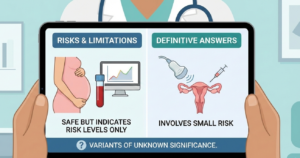
- Safe and simple, but they only indicate risk levels, not a confirmed diagnosis.
- It provides definitive answers but involves a very small risk of miscarriage or infection.
- Sometimes, test results might indicate variants of unknown significance, genetic changes whose effects are not fully understood yet.
That’s why it’s important to undergo testing under the guidance of trained healthcare professionals like Uncoded and discuss all results thoroughly with a doctor or genetic counsellor before making decisions.
The Process: What to Expect
The process for a DNA test during pregnancy depends on the type of test chosen.

- Most screening tests are done between the 10th and 20th weeks of pregnancy.
- The journey often begins with pre-test counseling to help parents understand the benefits, limitations, and implications of testing.
- This can be a simple blood draw (for NIPT or carrier screening) or a more specialized procedure (for diagnostic tests like amniocentesis).
- Laboratories use advanced NGS technology to analyze samples for even subtle genetic variations. Results are usually available within a few days to weeks, depending on the test type.
- Genetic counsellors explain results, suggest next steps, and provide emotional support if needed.
To Sum Up:
In today’s time, genetic testing during pregnancy is more than a medical procedure; it’s a proactive step toward a healthier, well-prepared parenthood journey. It empowers families with vital information about their baby’s health, allowing doctors to plan care, manage risks, and ensure the best outcomes possible.
With the support of advanced technologies like NGS, Uncoded, expecting parents can confidently navigate the path to parenthood with clarity and care. Ultimately, discussing important tests during pregnancy, including genetic and DNA-based ones, is essential during this time to avoid any future risk.