
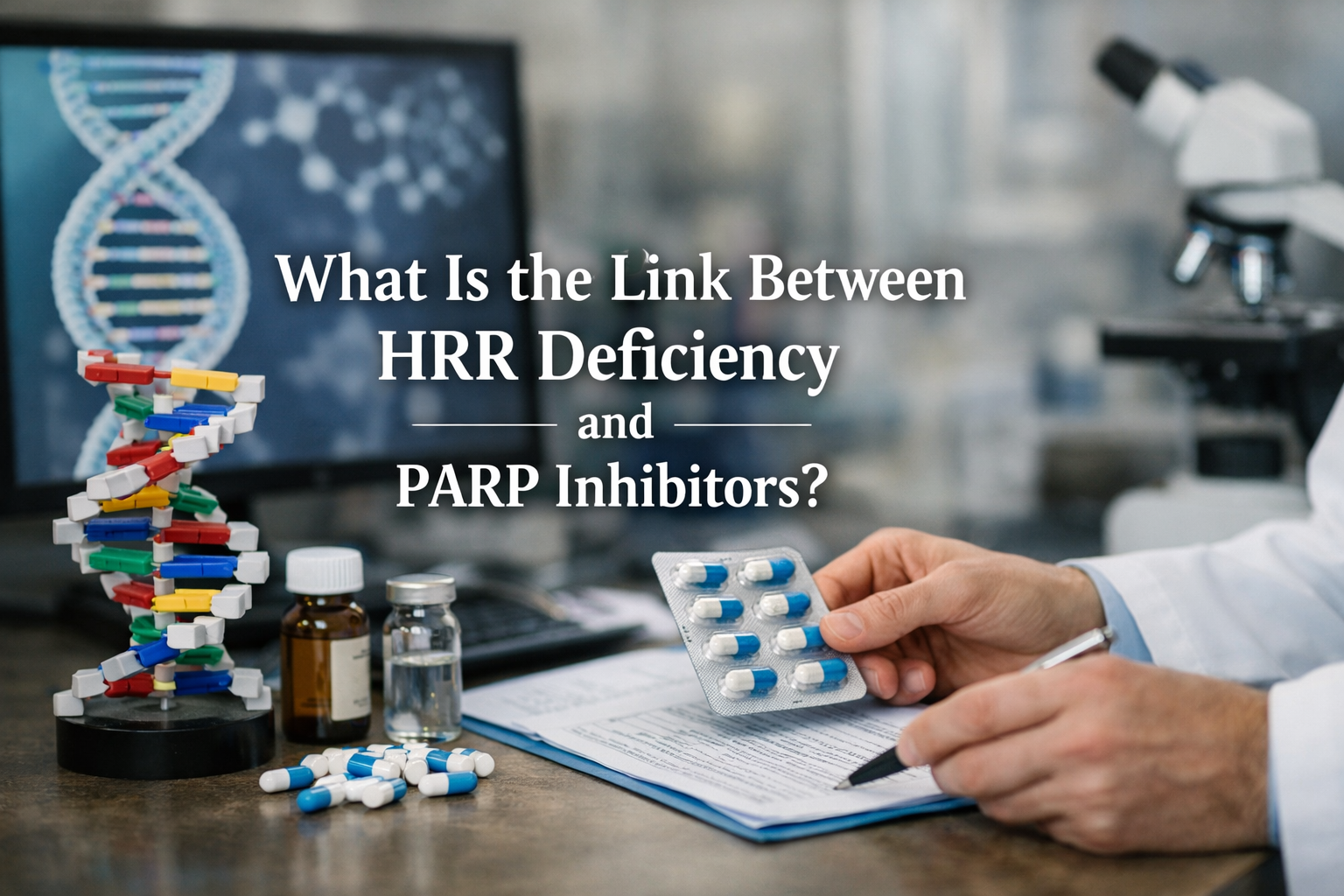
Advances in the field of cancer biology have improved the understanding of how cancer forms and responds to therapy. The most important discovery in the history of oncology has been the association between homologous recombination repair deficiency and targeted therapy for cancer, such as the use of PARP inhibitors.
The human body experiences many instances of DNA damage, which occurs because of external factors, stress, and natural biological processes. To keep the body stable, the human body has developed many mechanisms to repair the damage.
The most important repair process is the homologous recombination repair panel process. Deficiency in the homologous recombination repair process results in homologous recombination repair deficiency, which results in the development of cancer.
The weakness in the process of the development of cancer has been the key to the development of targeted therapy for the disease.
Scientists have found that the interaction between HRR deficiency and the use of PARP inhibitors presents an important possibility for the development of targeted therapy for the disease.
Understanding DNA Repair Mechanisms in Cells
Before we proceed to explore the relationship between HRR deficiency and PARP inhibitors, it is essential to understand how DNA repair works under normal circumstances.
Human cells face DNA damage on a regular basis from various factors such as radiation, chemicals, oxidative stress, and natural cellular processes.
If this damage is not repaired properly, it may lead to genetic mutations and uncontrolled cell growth. To avoid this, human cells use various repair mechanisms to maintain stability. SOme of them are:
- Base excision repair
- Nucleotide excision repair
- Mismatch repair
- Homologous recombination repair
- Non-homologous end joining repair
Homologous recombination repair is an essential DNA repair mechanism because it is used to repair double-strand DNA breaks, which are considered to be one of the most severe types of DNA damage.
What Is HRR Deficiency?
Homologous recombination repair deficiency arises when the DNA breaks are not repaired accurately with the matching DNA template.
There are various genes related to the homologous recombination repair pathway. When these genes are mutated and impaired, it is impossible for cells to repair DNA damage properly. This leads to cancer formation.
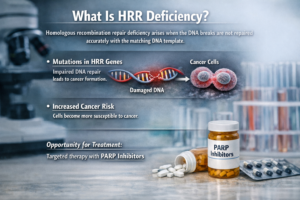
One of the best-known cases of HR deficiency is related to genes linked with cancer risk. The impairment of these genes creates an environment where cells are more susceptible to cancer formation.
However, this susceptibility creates an opportunity for treatment. This is what creates an opportunity for treatment with specific medication, such as PARP inhibitors.
Understanding PARP and Its Role in DNA Repair
In order to understand the relationship that exists between HRR deficiency and PARP inhibitors, it is important to first understand the functions of PARP enzymes in repair processes in cells.
When a cell is exposed to DNA damage, PARP enzymes are activated to detect this damage and trigger repair processes in the cell.
Under normal conditions, this repair process is mediated in conjunction with homologous recombination repair processes. When homologous recombination repair deficiency is present, however, cells become reliant on PARP enzymes in order to survive.
Link Between HRR Deficiency and PARP Inhibitors
The interaction of HRR deficiency and PARP inhibitors is based on a concept referred to as synthetic lethality.
Synthetic lethality is defined as a phenomenon whereby two genetic or other biological defects combine to be lethal but are not lethal when each defect is considered individually.
In this case, cancer cells with an hrr deficiency already have a weakened DNA repair system. When the parp inhibitors target the PARP system, the cancer cell is deprived of a second critical DNA repair system.
On the other hand, normal cells still have an intact homologous recombination system. This means that normal cells would still be able to repair DNA damage even when exposed to parp inhibitors.
Because of this mechanism of action, cancer cells with a homologous recombination repair system deficiency would be very susceptible to treatment with parp inhibitors.
Clinical Significance of HRR Deficiency in Cancer
The discovery of hrr deficiency and parp inhibitors has had a significant impact on cancer research and treatment. Researchers now understand that the identification of homologous recombination repair deficiency in cancer can lead to a more personalized treatment of cancer.
Various types of cancer that are linked to HRR pathway abnormalities include:
- Breast cancer
- Ovarian cancer
- Prostate cancer
- Pancreatic cancer
These types of cancer can be identified as to whether or not a treatment such as a parp inhibitor would be useful in treating a patient’s cancer.
As oncology treatment continues to become more precise, genetic testing is playing a larger role in identifying homologous recombination repair deficiency in cancer.
Advances in Genomic Research and HRR Analysis
The latest advances in the field of genomics enable the detection of hrr deficiency and the complex molecular mechanisms involved in the process of DNA repair.
With the latest advances in the field of genomics, researchers are able to use the latest sequencing technologies and bioinformatics tools to analyze the genetic variations associated with homologous recombination repair deficiency.
This helps researchers understand the process of tumor development and the impact of targeted therapy on the process.
Organizations like Uncoded play an important role in the development of the understanding of the genetic pathways involved in the development of cancer.
Future Directions in HRR and PARP Research
Currently, there is still much to be discovered about homologous recombination repair deficiency and new therapies. More biomarkers are still being discovered, and this can help scientists identify patients who can benefit from PARP inhibitors.
There are still many studies being done to improve treatment for cancer patients, including the combination of PARP inhibitors and other treatments, such as immunotherapy or chemotherapy.
Thanks to advancements in the analysis of genomic data, artificial intelligence, and other diagnostic tools.
More discoveries are still to be made about the relationship between HRR deficiency and PARP inhibitors, and this can improve the understanding of the mechanisms of DNA repair, including its use in cancer therapy.
Final Thoughts
The connection between homologous recombination repair deficiency and targeted therapies is one of the most significant milestones achieved so far in the study and treatment of cancer.
HRR deficiency compromises the ability of the cell to repair DNA strand damage, leading to genetic instability and increasing the risk of cancer.
This weakness, therefore, makes the affected cell vulnerable to targeted therapies such as PARP inhibitors. These inhibitors block the repair mechanism, thereby inducing synthetic lethality among the targeted cancer cells.
Uncoded are helping to drive research and increase knowledge about the connection between the genome and targeted therapies for the treatment and control of cancer.
As the science of precision medicine continues to improve and grow, the connection between hrr deficiency and parp inhibitors is set to remain an important area of research and study, leading to more possibilities for targeted therapies for the treatment and control of cancer.