

Genetic testing has become an integral aspect of the preventive care process, particularly with regard to identifying individuals with an increased predisposition towards certain hereditary forms of cancer.
Some of the most prominent genetic markers include the BRCA1 and BRCA2 genes, which play an important role in the maintenance of stable genetic material and the prevention of abnormal cell growth.
Due to the potential risks and implications of genetic testing, the process of identifying individuals with the BRCA gene mutation follows specific and established BRCA mutation screening guidelines.
Understanding the process of BRCA mutation testing criteria and the overall screening process can enable individuals and medical practitioners to make informed decisions.
Let’s discuss the primary genetic testing criteria and the importance of the testing process through this blog.
Understanding BRCA Mutations and Their Impact
BRCA1 and BRCA2 are tumour suppressor genes that help in repairing DNA damage. Their main function is to prevent cells from growing and dividing uncontrollably.
When there is a mutation in these genes, it makes it difficult to repair DNA damage. As a result, cells start to develop and grow uncontrollably, leading to cancer.
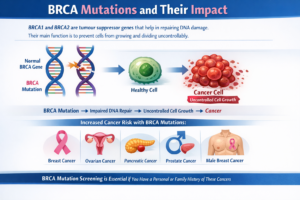
People who are carriers of a mutated gene in the BRCA gene are likely to develop many types of cancer in their lifetime. Such types of cancer include:
- Breast cancer
- Ovarian cancer
- Pancreatic cancer
- Prostate cancer
- Male breast cancer
Because of this, it is important to undergo a BRCA mutation screening when you have a personal or family history of any of these conditions.
Why Clinical Guidelines for BRCA Screening Are Important
However, not everyone is advised to undergo this process of genetic testing. Instead, there are established BRCA mutation screening guidelines that help identify a patient who is most likely to have a mutation.
These guidelines are followed to:
- Help identify patients with inherited cancer risk
- Ensure that patients are not subjected to unnecessary testing
- Help prevent unnecessary testing
- Help prevent unnecessary testing
By following a series of BRCA genetic testing guidelines, a patient can undergo this process of genetic screening in a way that is most beneficial to them.
Key BRCA Mutation Testing Criteria
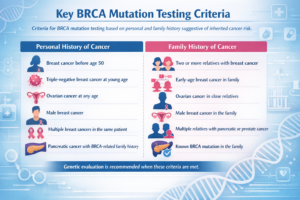
The criteria for brca mutation testing are based on individuals with a personal and family history suggestive of possible inherited cancer risk. Several factors are considered before referring patients for genetic screening.
Personal History of Cancer
Patients who have had cancer at a young age are considered to be within the criteria for BRCA mutation testing. Scenarios where patients can undergo BRCA mutation screening:
- Breast cancer occurring before the age of 50 years
- Triple-negative breast cancer occurring at a young age
- Ovarian cancer occurring at any age
- Breast cancer in men
- Multiple breast cancers occurring in the same patient
- Pancreatic cancer with a family history of BRCA-related cancer
Family History of Cancer
Family history is another major component of the BRCA genetic testing guidelines. Testing may be recommended when close relatives have been diagnosed with cancers associated with BRCA mutations.
Important family history indicators include:
- Two or more relatives with breast cancer
- Breast cancer diagnosed at an early age in family members
- Ovarian cancer in close relatives
- Male breast cancer in the family
- Multiple relatives with pancreatic or prostate cancer
- A known BRCA mutation in the family
When such patterns are observed, BRCA mutation screening guidelines recommend genetic evaluation to determine whether the mutation has been inherited.
Clinical Recommendations for BRCA Mutation Screening
Healthcare practitioners have well-established BRCA mutation screening guidelines to conduct BRCA genetic testing responsibly and effectively. The BRCA genetic testing guidelines generally recommend a multi-step approach.
Genetic counseling before testing
One of the most significant aspects of the BRCA genetic testing guidelines is genetic counseling before undergoing BRCA genetic testing.
Genetic counseling is essential for individuals to understand:
- The purpose of BRCA genetic testing
- Possible outcomes of BRCA genetic testing
- The implications of BRCA genetic testing on their families
- The preventive and management measures available
- The implications of BRCA genetic testing on their healthcare planning
Risk Assessment by Healthcare Providers
Prior to making recommendations for genetic testing, healthcare providers undertake a comprehensive risk assessment in accordance with the BRCA mutation testing criteria.
This may include:
- Personal medical history
- Family history of cancer
- Age at which family members were first diagnosed with cancer
- Type of cancers in family history
There may also be assessments undertaken to help estimate the probability of having a BRCA mutation. These assessments help determine if the BRCA mutation screening guidelines support testing for BRCA mutations.
Clinical Management After BRCA Mutation Detection
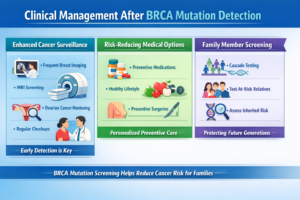
In the event that the mutation has been detected, the patient will be given personalized care depending on their individual risk factor status, as determined during the BRCA mutation screening process.
Enhanced Cancer Surveillance
One of the most recommended actions after the results are obtained and the patient has been diagnosed with having the BRCA1 and BRCA2 genetic mutations is to enhance their cancer surveillance. This may include:
- Increased and earlier breast imaging
- Use of MRI in the screening of breast cancer
- Monitoring of ovarian cancer
- Medical checkups and assessments
Enhanced surveillance will ensure that the patient’s cancer is detected at an early and more manageable stage.
Risk-Reducing Medical Options
The BRCA genetic testing guidelines also include the discussion of preventive measures for individuals with the BRCA genetic mutation.
This may include:
- Preventive medications
- Lifestyle and health management
- Preventive surgeries
The decision to undertake preventive measures will vary depending on the individual patient’s status, their personal risk factors, and their history.
Family Member Screening
This is because, since BRCA mutations are inherited, BRCA mutation screening guidelines may also advise testing for other family members should a mutation be identified.
This is sometimes referred to as cascade testing and is used to detect other family members who may also be carrying the mutation and therefore require early intervention.
Carrying out BRCA mutation screening on other family members can help reduce the risk of cancer for many generations.
Final Thoughts
The BRCA genes are some of the most prominent genetic factors linked to hereditary breast and ovarian cancer.
The BRCA mutation testing criteria are largely based on personal cancer history, family history, and risk factors for the population.
By following the BRCA mutation screening guidelines, healthcare professionals can help identify individuals at risk of cancer and thus recommend the necessary brca mutation testing.
Organizations like Uncoded are helping to shape the future of this evolving trend, thereby improving the quality of data-driven insights and creating greater awareness about the BRCA 1/2 Panel importance of genetics and hereditary cancer risk.
As medical science continues to progress, BRCA genetic testing guidelines and BRCA mutation screening are going to play an important role in preventive healthcare, allowing people to better understand their genetics and thus take necessary steps to maintain their health.